Upcoming Events
For volunteer opportunities, please check out events marked with a blue ribbon! Don’t see any available dates? Our events open on a rolling basis, so check back at the beginning of each month!

- This event has passed.
Between Two Oaks: Do Trees Have Agency? with Dr. Jason Newton
Between Two Oaks
VIRTUAL SUMMER SPEAKING SERIES

Calling all tree nerds and nature enthusiasts! Join Urban Forest Educator and Arborist, Heather Brent, along with an exciting lineup of local experts, for TreesCharlotte’s new virtual summer speaker series, Between Two Oaks. Each session dives into a unique tree-inspired topic, blending science, art, history, and ecology while exploring fresh perspectives on Charlotte’s urban forest and beyond.
This summer’s lineup includes:
- Tuesday, June 2, 2026 – Trees in Art with Mary Stewart
- Thursday, July 9, 2026 – Do Trees Have Agency? with Dr. Jason Newton
- Tuesday, August 4, 2026 – Keystone Trees and Soft Landings with Linda Nelson
Every event kicks off with an introduction from Heather Brent, followed by a presentation from the featured guest speaker, and a live audience Q&A. Registered participants will receive a virtual access link within 24 hours of each event. Whether you’re a lifelong arbor enthusiast or just tree-curious, this series promises thoughtful conversations, surprising insights, and a deeper appreciation for the roots of our urban landscape.
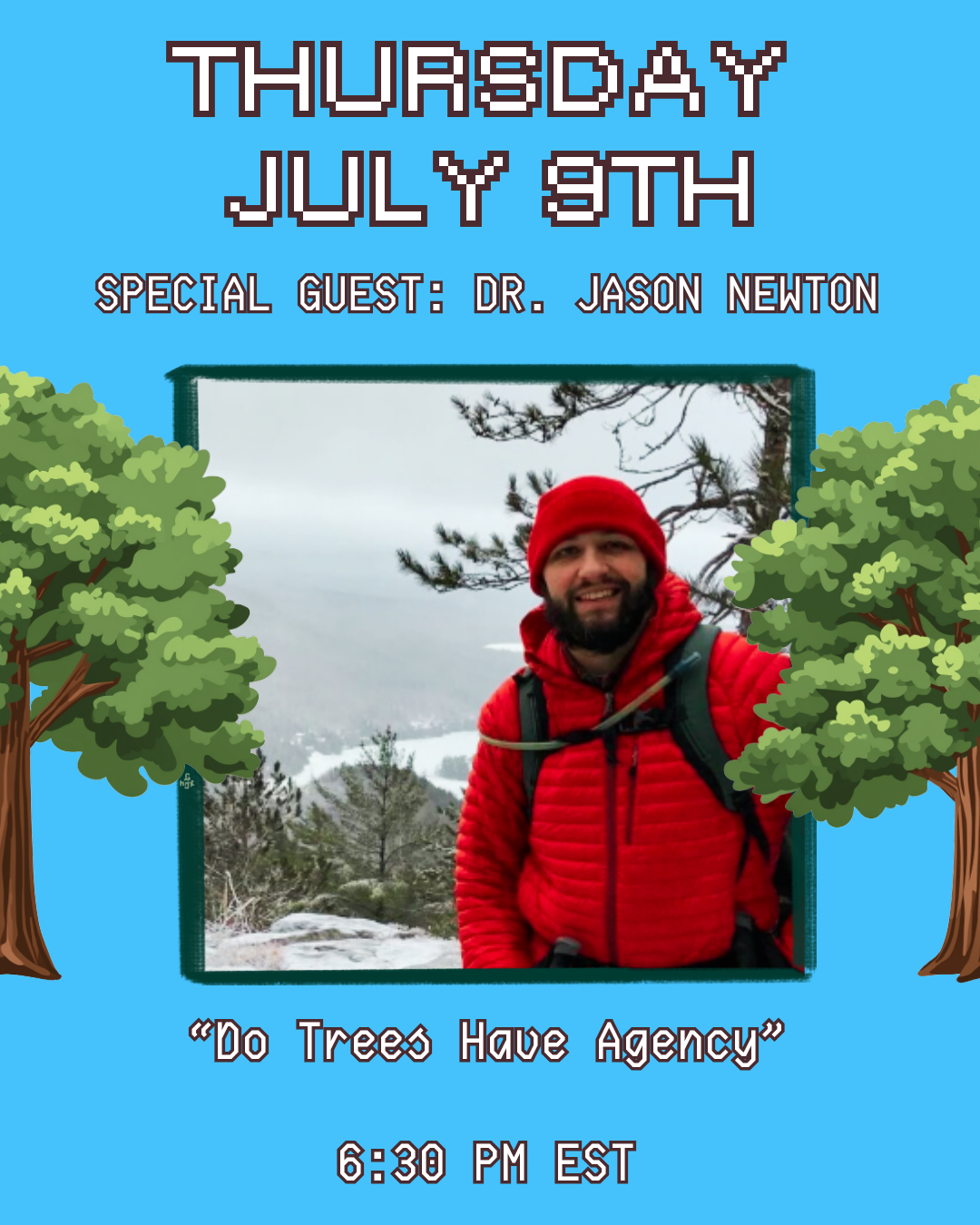
Tonight’s Special Guest: Dr. Jason Newton
Discussion Topic: Have trees changed the course of history? How do historians give forests and trees agency in the stories they tell about the past? Dr. Newton will provide a brief introduction to the field of “environmental history” and explain how some historians center non-human nature in the narratives they construct.
Bio: Dr. Jason Newton is a historian and educator whose work focuses on the intersections of capitalism, labor, and environmental history in the United States. He currently serves as an Assistant Teaching Professor in the Department of History at UNC Charlotte, where he teaches courses on capitalism studies, labor history, technology, and the environment. Newton is the author of Cutover Capitalism: The Industrialization of the Northern Forest, 1850–1950, a book that examines how industrialization transformed both workers and natural landscapes in the American Northeast and was a finalist for the 2025 George Perkins Marsh Prize in environmental history. His research often explores how labor, ecology, class, and ideas of masculinity shaped industrial society in rural America. Through his scholarship and teaching, Newton combines environmental history with social and economic analysis to better understand the development of modern capitalism.