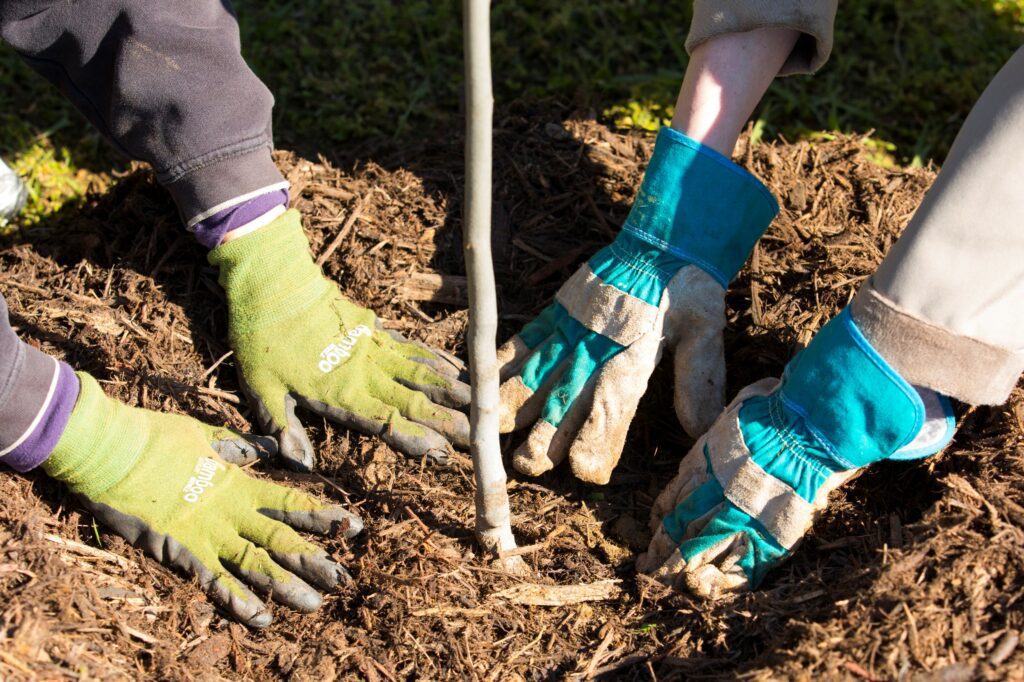
Want to advocate on behalf of our tree canopy and local environment? Getting involved is easier than you might think, whether it’s speaking up at community meetings, connecting with local officials, or encouraging smarter development choices. Your voice can help protect the natural spaces that make our neighborhoods healthier and more livable.
Photo by Jason E. Miczek – www.miczekphoto.com
Steps to Advocacy
1. Define your issue and objective(s).
Clearly define the problem and the changes you want.
Gather facts and supporting data and/or visuals.
2. Engage your neighborhood association or local civic organization.
Many neighborhoods have associations that can amplify your voice. Check to see if you have an established neighborhood organization here.
If your issue involves sustainability, environmental concerns, or trees, consider connecting with us, TreesCharlotte, and/or any of our partners in advocacy:
3. Build support through petitions or community outreach.
Launch a community petition (such as on change.org) to gather support for your campaign.
Talk to neighbors, share on social media, and collect signatures.
4. Contact your elected officials
Email or call your City Council member, Mayor, or County Commissioner with a clear, concise message that explains the issue, its local impact, and what you’re asking for.
Emailing City Council? Copy City Clerk <cityclerk@ci.charlotte.nc.us>, to have your message officially received.
Emailing County Commissioners? Copy the County Clerk <Clerk@mecknc.gov>, to have your message officially received.
5. Prepare to speak at public meetings.
Attend and sign up to speak at City Council, Commission, or Planning meetings. Typically, you get 1–5 minutes in the public comments section.
Practice a polished, respectful statement focusing on your issue and request.
6. Attend budget hearings, listening sessions, and town halls.
Charlotte hosts budget listening sessions each season. These are great platforms to present your priorities directly to staff and elected officials.
Many elected officials host town halls. Follow your elected officials through their newsletters and social media platforms to find out when these are being hosted and how you can attend. Have your question(s) practiced and ready to announce.
7. Request face‑to‑face meetings.
Email or call the official’s district office to set up a sit-down. In-person meetings are impactful and allow for two-way dialogue. Offer to share your research or community feedback.
Another option is to invite your elected officials to attend a neighborhood association meeting, where association members can ask direct questions about the issue you are raising awareness for.
8. Stay engaged and follow up.
After meeting or speaking, follow up with a thank-you email summarizing your key points and any commitments made.
Ask for a follow-up by a specific date, if needed. Follow up ahead of the agreed upon time with a simple reminder of your request.
Track official responses, next steps, or public hearings. If you have started an online campaign, share your progress with your followership.
9. Use media and public channels
Write letters to local outlets or submit public comments: