The following contains information regarding the City of Charlotte’s tree regulations. This is a summary of key points and is not intended to be fully comprehensive. For full details, please consult the Charlotte Tree Manual (CTM) or contact the City of Charlotte Urban Forestry.
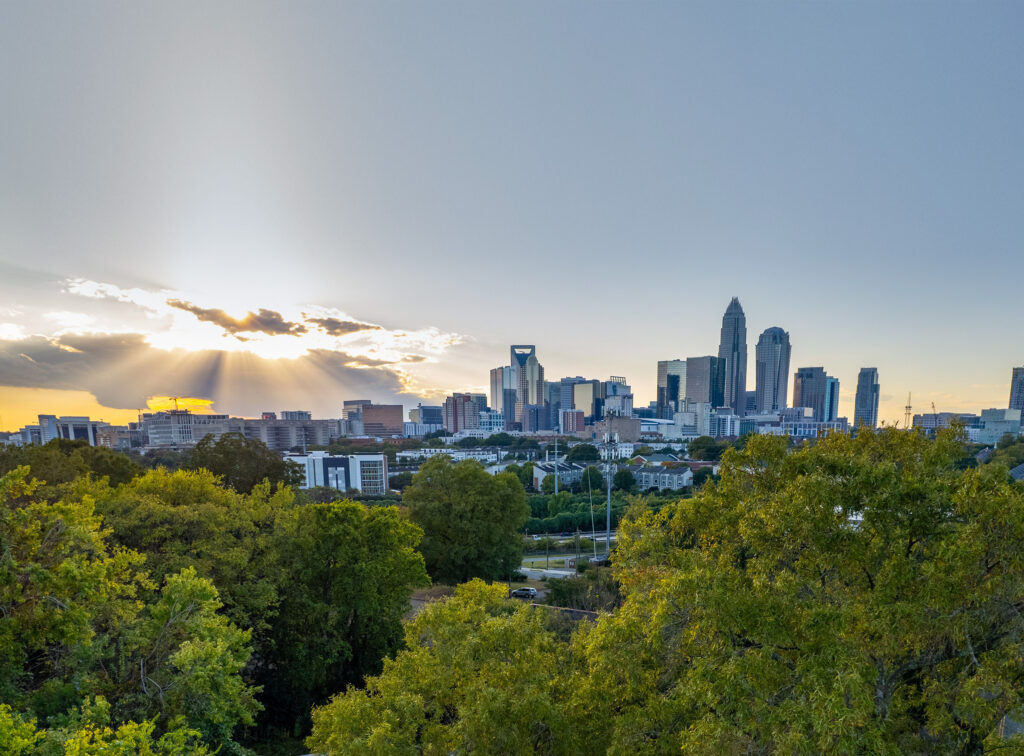
You often hear when it comes to saving a tree that just one tree doesn’t make a difference. Statements like that can make us feel small and powerless, as though we as individuals cannot change our city’s tree canopy for the better. Yet there are many things that each of us, as tree advocates or “TreeSpeakers”, can do to positively affect our tree canopy. A TreeSpeaker first and foremost is someone who advocates for the preservation of trees. But what does speaking for the trees look like in reality? Here’s how to get started.
“Unless someone like you cares a whole awful lot,
Nothing is going to get better. It’s not.”
― Dr. Seuss, The Lorax
7 Simple Steps to Save Trees
(1) Join your local neighborhood association.
Or if your neighborhood doesn’t have one, consider starting one. This is your chance to advocate for tree preservation and tree canopy growth. A great start for your neighborhood association is applying for a CommunityWoods event with TreesCharlotte.
Don’t know if your neighborhood has an organization already? You can check here to see if one is registered with the city.
(2) Follow local rezonings and new development.
Work with your neighbors and local developers to educate others on the benefits of trees and to use your voice to keep as much of the healthy tree canopy as possible. Check out the City of Charlotte’s rezoning page for more resources. You can also use the city’s Development Near Me app. This resource provides a map depicting public infrastructure and private development occurring across Charlotte.
While you are working through this process, it is important to note that there is a difference between the rezoning process and by-right land development processes.
- Rezoning is required per state law to provide community engagement and feedback opportunities during the process at multiple stages.
- By-right land development is not required to provide public/community engagement nor feedback opportunities
(3) Do you know who your City Council and County Commissioner representatives are? What is their stance on environmental protection and tree preservation?
If you don’t, this is an opportunity to start following now and support their tree canopy efforts. Voice your opinions with them often, especially during times when trees are in the news (e.g. heat wave). Write letters, call, or speak at council meetings. Find out more about your Charlotte City Council representatives here and your Mecklenburg County Commissioners here.
(4) Educate your neighbors, family members, and friends.
Use your voice to educate others on the significance of trees. You can do this by organizing local tree focused events in your community and by becoming a TreeAmbassador with TreesCharlotte. Invite TreesCharlotte to speak at a neighborhood meeting.
(5) Advocate for the use of ISA Certified Arborists.
All developments in your community can benefit from the exclusive use of ISA Certified Arborists. ISA stands for “International Society of Arboriculture,” and is the world renowned accrediting organization for certified arborists. You can check an arborist company’s credentials by visiting the ISA’s Trees Are Good database. Additionally, we have local recommendations for arborist companies on our “Tree Care Tips” page.
(6) Insist on tree protection and fences!
Installing a tree fence provides a “no construction zone” for the tree and protects its critical root system from compacted soil, crushed and damaged roots, and major roots being severed. Visit our “Protecting Trees from Construction” page for more details.
Development projects regulated by the City of Charlotte are reviewed by the Urban Forestry Group to ensure ordinance required tree protection fencing is depicted on plans as required.
(7) But what if a tree needs to be removed?
Advocate for the right kind of tree replacement. If a tree in a savable location is deemed unhealthy or a hazard and is recommended for removal by the site’s ISA Certified Arborist, advocate that this tree is replaced with a tree of similar stature and that there is enough room saved from the construction process for a similar tree to take the place of the one(s) removed. Our “Planting and Placement” page has more tips on how to choose the right tree for the right place.
Saving Trees FAQs
I’ve taken the steps above but I’m still concerned about the tree loss at a specific site/project. What else can I do about this?
One of the best ways to help mitigate tree loss locally is by working directly with the developers of the land you are concerned about. A good way to do this would be to use your neighborhood association (or yourself, if you do not have one) to reach out to the developer and have them present to your association on their development plans. You might be able to gain some trust by fostering a relationship with them and might be able to advocate for more tree preservation than they are suggesting at the upfront. Charlotte’s Urban Forestry has guidelines for tree preservation that they will have to oblige by, but it is good to understand what a developer might be able to do above and beyond that, or what those requirements will be for that specific site.
In terms of saving trees specifically, here are a couple of resources for you for some other measures that you’d want to take (Arbor Day Foundation, NC State, and Univ. of New Hampshire). One of the most important things you’ll want during construction is enough space for trees to protect its critical root zone (typically you need at least 1’ of space for every 1” of DBH (diameter at breast height). This is the area where you’d put up your tree fence. Even outside of this tree protection fence, most likely roots will be severed, land will be disturbed, the canopy might be cut back, if the construction abuts against the fence. You can ask that the development company work with an ISA Certified Arborist to do an assessment of the tree(s) you are looking to save and then give their professional recommendation on the necessary steps to take. We have local arborist recommendations on our website here, and then you can also use the ISA’s “Find an Arborist” tool to view other recommendations.
One of the best things you can do for your advocacy campaign is speak publicly about it. While you may not see the complete results that you would like to see (e.g. no development) it’ll hopefully at least push the conversation to build in an environmentally conscious way where we’re being intentional about where to build and how, and how to work with nature. Some ways to do this would be to connect with your local neighborhood association, speak with your elected local officials by calling or writing to them, speak at a City Council Meeting, or a Mecklenburg County Board of Commissioners Meeting. We encourage you to use facts about the environmental impacts that a full redevelopment or land clearing to make your advocacy campaign more meaningful. You can send that information to your elected officials but also to media organizations (such as Queen City News, WFAE, WCNC, WSOC TV, Charlotte Observer, Charlotte Ledger, QC Nerve) and see if you can get news outlets to pick up your story.
Additionally, what we have found through our canopy assessments as well is that the greatest loss for tree canopy happens on residential property. TreesCharlotte is committed to helping grow and protect those residential tree canopies through our programming by providing our services throughout the city. If you know of any parcels in your neighborhood that are private property and could benefit from tree planting, please let us know so that we can access the site for a future event. This could help expand the tree canopy in your neighborhood near areas of development, helping to offset canopy loss.
If a tree has been approved for removal, is there anything I can do to stop it from being removed?
While you can’t legally stop the removal of trees that meet the requirements of the tree protection and zoning or building regulations, you can still advocate for changes to the development plans. Speaking directly with the property owner may lead to alternatives that preserve more trees. In some cases, even small changes to construction or landscaping plans can help save more trees than originally planned.
We strongly encourage you to reach out to the developer or homeowner early, and in a positive, constructive manner, if there’s a risk of unnecessary tree removal. Starting the conversation early allows you to share your concerns and highlight the value of preserving trees. Providing feedback during the planning phase increases the chances of identifying solutions to protect existing trees. Approach the discussion as a two-way dialogue and work collaboratively to explore alternatives that could help avoid tree loss.
If you believe that builders/owners are not following the requirements of the Charlotte Tree Manual, you can report the violation to the City of Charlotte Urban Forestry.
I’m concerned about a tree in the right-of-way that is being removed. What do I do?
While removal of trees can be distressing, in most cases the right-of-way tree that is being removed is declining in health. Therefore, for safety reasons, it’s best to remove any trees that are deemed dead, diseased, or dying. You can advocate for the replacement of this tree (either at this site or close-by) through the City of Charlotte Landscape Management Division here
If you see someone pruning, topping, or removing a right-of-way tree and you do not think they have permission to do so, we highly recommend getting in touch with the City of Charlotte Landscape Management Division via 311 to report the issue.
How can I have a tree planted in the right-of-way near my house?
We recommend getting in touch with the City of Charlotte Landscape Management Division here for more information and to request a site inspection.
How do I know if someone has a permit to remove a tree?
The best way to understand if someone has a permit to remove a tree is to get in contact with Urban Forestry and the Tree Ordinance Compliance Department.
Doesn’t the Charlotte Tree Manual and UDO have tree protections?
The UDO has tree protections in place for heritage trees. “Trees native to North Carolina per the USDA-NRCS Plants Database with a DBH ≥ 30 inches. DBH (diameter at breast height) is measured on tree trunk at 4 ½ feet above the ground.” It is prohibited to remove any heritage tree without a permit or City-approved land development plan is prohibited. There are exceptions for cases of declining health or hazard reasons, but those would still need to be filed with Urban Forestry.
What do I do if I see trees being removed and I’m concerned that this is not permitted?
If you believe that the tree removal is illegal and not allowed per city ordinance, you can report that activity to Urban Forestry.
Do I need a permit to remove a tree in my yard?
Depending on the tree that you are looking to remove, you may be required to obtain a permit from the city’s Urban Forestry. Please reach out to them with any inquiries and/or questions. “[City] ordinance protects City street trees, heritage trees, and other non-development protections.”
Have more questions or are interested in proposing a TreeSpeakers campaign for a specific issue? Reach out to us through the contact form below.
Contact Form
We would love to hear from you! Please fill out this form and we will get in touch with you shortly.